Transantarctic Mountains
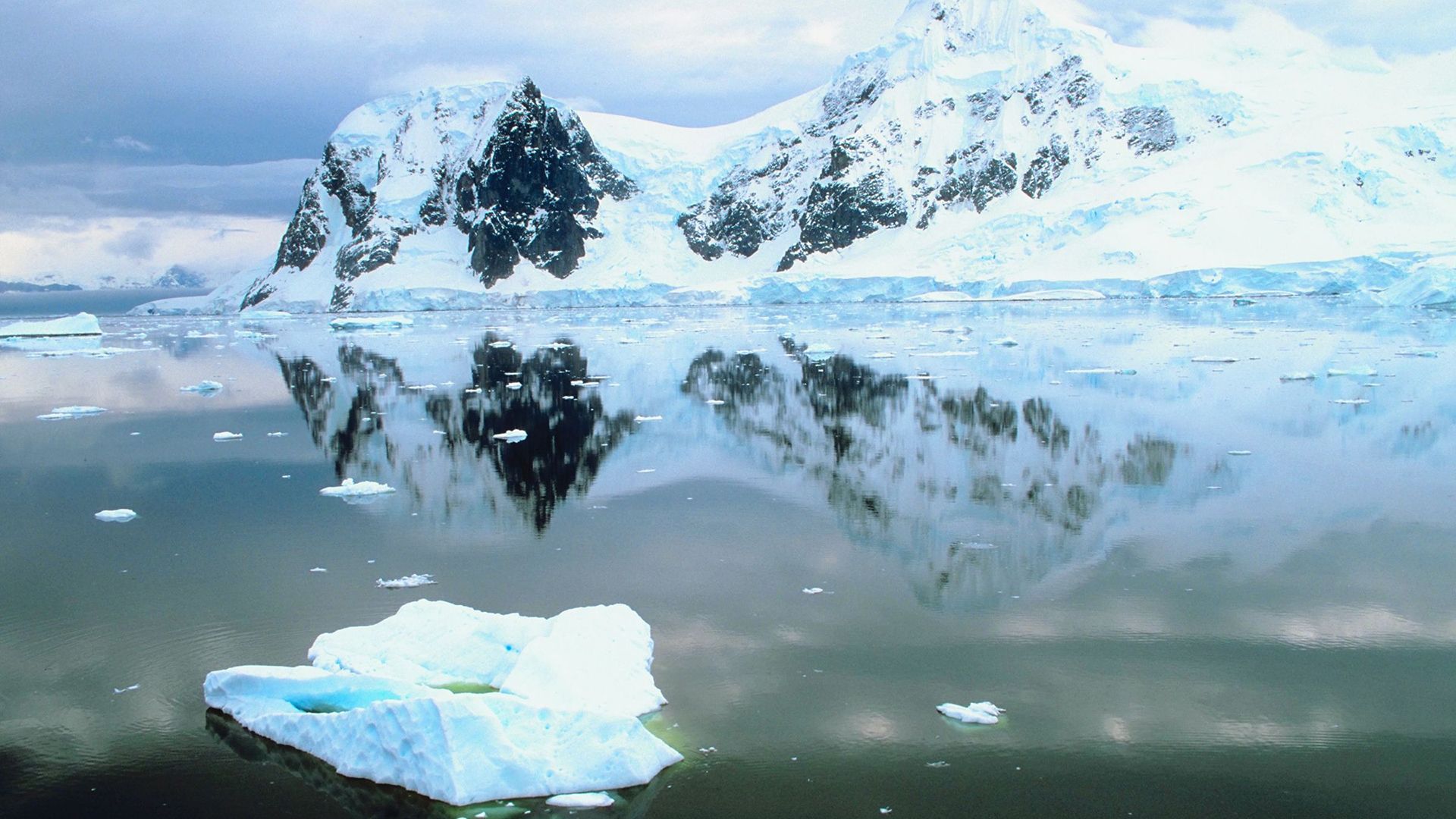
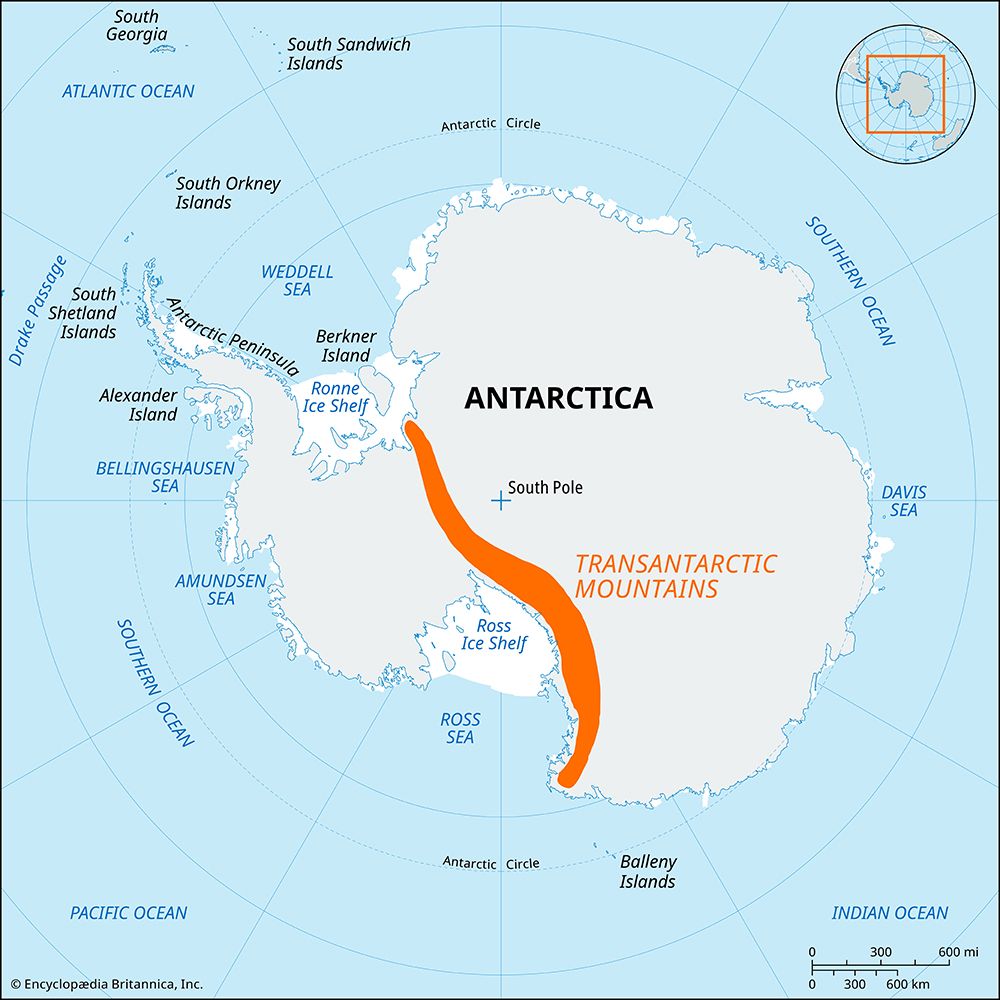
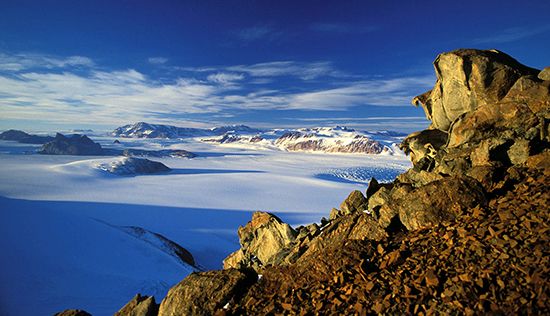
The Transantarctic Mountains are a massive mountain system stretching more than 2,000 miles (3,200 km) from Victoria Land to the shores of the Weddell Sea.
How long are the Transantarctic Mountains and what is their geological significance?
The Transantarctic Mountains are a massive mountain system stretching more than 2,000 miles (3,200 km) from Victoria Land to the shores of the Weddell Sea.1
Geologically, the range is highly significant for several reasons:
- Structural Boundary: The mountains serve as a horst, or fault-block belt, that subdivides the Antarctic continent into two distinct structural provinces: the stable, ancient Gondwana shield of East Antarctica and the younger, mobile Andean province of West Antarctica.2
- Fossil Record: The range contains the Beacon Sandstone, a formation rich in fossilized remains that provide evidence of Antarctica’s warmer past. This includes Permian and Triassic coal deposits containing Glossopteris and Dicroidium trees, as well as amphibian, reptile, and dinosaur fossils.12
- Thermal Uplift: While the range follows older geological structures, its current high elevation is likely due to recent heating of the lithosphere and associated thermal expansion, rather than traditional mountain-building processes.3
What are the Transantarctic Mountains and where are they located in Antarctica?
The Transantarctic Mountains are a vast mountain system that divides the Antarctic continent into two distinct regions: East Antarctica and West Antarctica.1
Spanning more than 2,000 miles (3,200 km), the system extends from Victoria Land to the shores of the Weddell Sea. of the Weddell Sea. The range is largely obscured by an extensive ice sheet and numerous glaciers, though it features several prominent subdivisions, including the Queen Maud Mountains—where the system reaches its highest point at Mount Kirkpatrick—as well as the Shackleton, Pensacola, Horlick, Queen Alexandra, Britannia, Prince Albert, Dufek, and Admiralty ranges.1
Beyond their geography, these mountains are notable for containing significant coal reserves and fossilized remains of ancient amphibians and reptiles, providing critical insights into the continent’s history.1
What kinds of flora and fauna, if any, exist in the Transantarctic Mountain region?
The Transantarctic Mountains exist within an extreme cold-desert environment, which severely limits the presence of life. Due to the harsh climate, high winds, and extensive ice cover, the region supports only an impoverished community of cold-tolerant organisms.14
Flora
Plant life in the region is restricted to non-vascular and simple forms capable of surviving long periods of darkness and dormancy. These include:
- Lichens: Approximately 350 species are found in Antarctica, often growing on heat-absorbing, dark-colored rocks that create favorable microclimates.45
- Other Vegetation: The flora also consists of mosses, liverworts, fungi, bacteria, and freshwater algae.4
- Endolithic Life: Unique cyanobacteria live within the surface of porous rocks in the dry valleys of southern Victoria Land, remaining dormant until rare melting snow provides necessary moisture.6
Fauna
Terrestrial fauna is extremely sparse and limited to microscopic or small invertebrates, primarily found in moist moss beds. These include:
- Protozoans, rotifers, nematodes, tardigrades, collembola (primitive wingless insects), and a species of mite.6
While the modern landscape is barren, the region is geologically significant for its fossilized remains of ancient amphibians and reptiles, which provide evidence of a much warmer prehistoric climate.1
What evidence of past climates and environments can be found in the Transantarctic Mountains?
The Transantarctic Mountains serve as a vital geological archive, preserving evidence of Antarctica’s transformation from a temperate, life-rich landmass to the ice-covered continent seen today.
Fossil Record and Ancient Environments
The Beacon Sandstone, a rock formation within the mountains, contains a rich record of extinct life that indicates significantly warmer climates in the past:2
- Temperate Forests: Coal deposits from the Permian and Triassic periods contain fossils of Glossopteris and Dicroidium trees, signaling the presence of ancient temperate forests.2
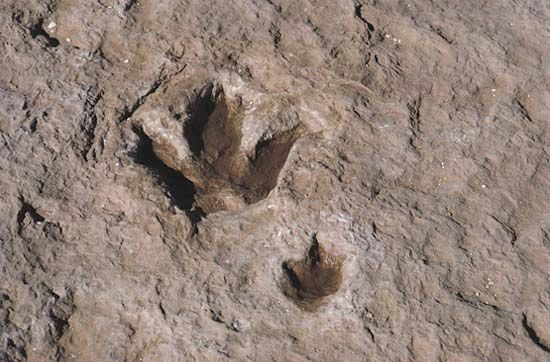
- Fauna: Fossils of freshwater fish, amphibians, and reptiles—including the Triassic-age Lystrosaurus—have been discovered.210
- Dinosaurs: The 1990–91 discovery of early Jurassic dinosaur fossils near the South Pole suggests that the region once experienced mild climates while located at a lower latitude.2
- Late-Stage Flora: The discovery of Nothofagus (southern beech) pollen dating to approximately 3 million years ago suggests that these trees persisted even as the continent drifted poleward and began to glaciate.1
Glacial and Geological Evidence
- Glacial Deposits: Tillites, which are rocks deposited by ancient glaciers, underlie Permian coal beds, providing evidence of earlier glacial cycles.2
- Erratic Boulders: The presence of glacial erratics containing microfossils from the Cretaceous and Cenozoic eras indicates the existence of younger rock layers hidden beneath the modern ice sheets.2
Sources
- Transantarctic Mountains — Encyclopædia Britannica
- Antarctica - Structural framework — Encyclopædia Britannica
- mountain - Residual mountain ranges and thermally uplifted belts — Encyclopædia Britannica
- Polar ecosystem - The Antarctic region — Encyclopædia Britannica
- Polar ecosystem - Biota of Antarctica — Encyclopædia Britannica
- Antarctica - Plant life — Encyclopædia Britannica
- Antarctica: Top Questions — Encyclopædia Britannica
- Mountain ecosystem - Origin — Encyclopædia Britannica
- glacier - Climatic conditions — Encyclopædia Britannica
- Antarctica - Antarctica and continental drift — Encyclopædia Britannica
Published on · 3 min read