Bayou
A bayou is a marshy, slow-moving or still body of water, typically appearing as a creek, a minor river, or a secondary watercourse that serves as a tributary…
What is bayou?
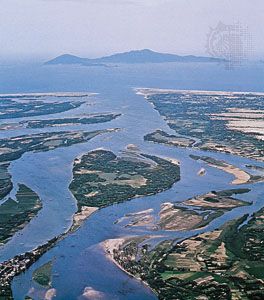
A bayou is a marshy, slow-moving or still body of water, typically appearing as a creek, a minor river, or a secondary watercourse that serves as a tributary to a larger river or channel. These features are characteristic of the Mississippi River delta in Louisiana and can sometimes manifest as an oxbow lake.12
How does an oxbow lake form?
An oxbow lake is a small, often crescent-shaped body of water that forms when a river abandons a meander loop. The process occurs through the following stages:34
- Formation of a Meander: A river develops extreme U-bends, or meanders, as it flows through alluvial materials, shifting its path over time.5
- The Cutoff: As the river continues to erode its banks, the neck of a meander loop becomes increasingly narrow. Eventually, the river cuts through this neck to shorten its course, creating a more direct channel.35
- Isolation: The old meander loop is rapidly blocked off by sediment, sealing it away from the main river channel.34
- Evolution: Over time, the isolated lake may silt up, eventually transforming into a marsh or a meander scar, which is marked by distinct vegetation or the absence of cultivation.35
What unique plants and animals live in a bayou?
Bayous and their associated swampy environments are ecologically rich habitats that support a diverse array of flora and fauna. These areas are characterized by their slow-moving water and lush vegetation, which provide critical shelter and food sources for many species.
Plant Life
The vegetation in these regions is largely shaped by the waterlogged soil and climate. Common plant life includes:
- Trees: The bald cypress is highly emblematic of these swamps, often draped with Spanish moss. Other common trees include live oaks, magnolias, and various bottomland hardwoods.789
- Aquatic Plants: The water supports sedges, pondweeds, and millets, which are essential for local food webs.10
- Epiphytes: In many swamp environments, trees host ferns, bromeliads, and various orchids.7
Animal Life
The abundance of cover and food makes these areas vital for a wide range of wildlife:
- Reptiles and Amphibians: The American alligator is a signature predator of these waters. Turtles and various snails are also common.78
- Birds: Bayous serve as important stopovers for waterfowl migrating along the Mississippi Flyway, including ducks, geese, and swans. Wading birds such as egrets, herons, and roseate spoonbills are frequently sighted.7109
- Mammals and Aquatic Life: The waters are home to river otters, muskrats, and crayfish. In brackish areas, shrimp, crabs, and various catfish species are prevalent.7108
Why are river deltas important for the environment?
River deltas are vital environmental features that serve as complex transition zones between riverine and marine systems. Their importance is rooted in several key ecological and geological functions:
- Biodiversity Support: The areas between river channels within a delta often support diverse ecosystems, including freshwater marshes, swamps, and mangrove forests. These habitats provide essential breeding, feeding, and nesting grounds for a wide variety of wildlife.1314
- Sediment and Nutrient Cycling: Deltas act as critical sinks for stream-borne sediments and nutrients transported from the drainage basin. This depositional process helps shape the shoreline and creates productive landforms.1513
- Coastal Protection: By serving as a buffer between the land and the ocean, deltaic plains—particularly those with extensive vegetation like mangroves—help mitigate the impact of marine processes and tidal energy on the coastline.1314
- Agricultural and Economic Value: Historically, the nutrient-rich sediments deposited by floodwaters have made deltaic plains extremely productive for agriculture, supporting the development of major civilizations. Additionally, ancient deltaic rocks are significant reservoirs for the world’s petroleum resources.13
Sources
- bayou — Encyclopædia Britannica
- bayou — Merriam-Webster
- oxbow lake — Encyclopædia Britannica
- oxbow lake — Merriam-Webster
- meander — Encyclopædia Britannica
- A Glossary of River Words | Meander — Merriam-Webster
- Big Cypress National Preserve — Encyclopædia Britannica
- Mississippi River - Plant and animal life — Encyclopædia Britannica
- Louisiana - Plant and animal life — Encyclopædia Britannica
- Everglades National Park: Top Questions — Encyclopædia Britannica
- Mississippi - Plant and animal life — Encyclopædia Britannica
- Louisiana - Agriculture and forestry — Encyclopædia Britannica
- river - Deltas — Encyclopædia Britannica
- delta — Encyclopædia Britannica
- river - Classification of deltas — Encyclopædia Britannica
- river - Morphology of deltas — Encyclopædia Britannica
Published on · 3 min read