Watercress
Watercress (Nasturtium officinale) is a perennial aquatic plant belonging to the mustard family (Brassicaceae). Native to Eurasia, it has become naturalized…
What is watercress?
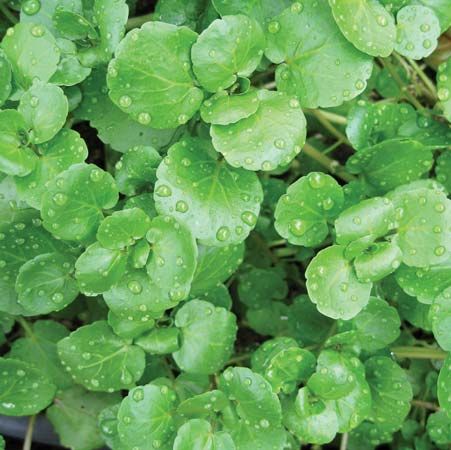
Watercress (Nasturtium officinale) is a perennial aquatic plant belonging to the mustard family (Brassicaceae). Native to Eurasia, it has become naturalized throughout North America and typically thrives in cool, flowing streams where it grows submerged or floating on the water.12
The plant is widely cultivated for its edible young shoots and delicate, peppery-flavored leaves, which are often used in salads or as a potherb and are notably rich in vitamin C. Physically, watercress forms bushy colonies with stems that root freely, bearing pinnately compound leaves and clusters of tiny, four-petaled white flowers.123
It is important to note that watercress is not closely related to the common garden ornamental nasturtium (Tropaeolum), despite the scientific name of the former.13
What are other examples of plants in the mustard family?
The Brassicaceae family, commonly known as the mustard family or crucifers, encompasses over 4,100 species of flowering plants. These plants are widely recognized for their economic importance as food crops and their use as ornamentals.456
Economically Important Food Crops
Many common vegetables belong to the genus Brassica or other related genera within the family. Notable examples include:47
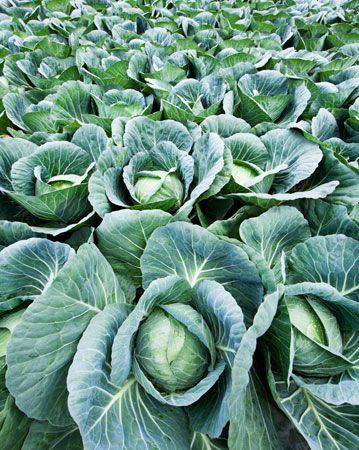
- Cruciferous Vegetables: Cabbage, broccoli, cauliflower, Brussels sprouts, kale, collard, kohlrabi, and napa cabbage.476
- Root and Stem Crops: Turnip, rutabaga, and radish.476
- Condiments and Greens: Horseradish, wasabi, arugula, white mustard, and brown mustard.46
Ornamental Species
Several members of the family are cultivated for their showy, cross-shaped flowers:46
How does watercress differ from garden cress?
While both watercress and garden cress belong to the mustard family and are valued for their piquant flavor, they differ significantly in their growth habits and botanical classification.
- Watercress (Nasturtium officinale) is a hardy, perennial aquatic plant native to Eurasia. It thrives in cool, flowing water, where it grows submerged or floating in streams, pools, and ditches. It is known for its bushy colonies and stems that root freely in moist soil or water.13
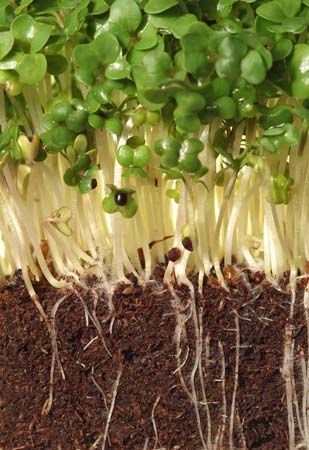
- Garden cress (Lepidium sativum), also known as peppergrass, is a fast-growing annual plant native to western Asia. Unlike the aquatic watercress, garden cress is typically grown in soil. It is widely cultivated for its seedlings, which are frequently used as a garnish or in salads, and it is particularly popular in its curl-leaved form.3
While both are used as salad greens or seasonings, their distinct environmental requirements—aquatic versus terrestrial—set them apart in cultivation.13
What makes watercress an aquatic plant?
Watercress (Nasturtium officinale) is classified as an aquatic plant because it is biologically and ecologically adapted to thrive in cool, flowing water environments, such as streams, pools, and ditches. Unlike strictly terrestrial plants that require specialized soil-based root systems for stability and nutrient uptake, watercress is capable of growing submerged, floating on the water’s surface, or spreading across saturated mud surfaces.1
The plant exhibits a unique growth habit, often forming bushy colonies and rooting freely from its stems, which allows it to exploit these moist, aqueous habitats effectively. While watercress is a vascular plant—possessing the xylem and phloem necessary for internal transport—its ability to flourish in water reflects an ecological niche where the surrounding environment provides consistent access to the moisture and nutrients required for its rapid development.18
Sources
- watercress — Encyclopædia Britannica
- watercress — Merriam-Webster
- cress — Encyclopædia Britannica
- Brassicaceae — Encyclopædia Britannica
- brassica — Encyclopædia Britannica
- Brassicales - Brassicaceae , Capparaceae, and Cleomaceae — Encyclopædia Britannica
- list of economically important members of the family Brassicaceae — Encyclopædia Britannica
- Tree - Tree structure and growth — Encyclopædia Britannica
- Plant - Definition of the category — Encyclopædia Britannica
Published on · 3 min read