Britannica’s Flower Bingo
Britannica’s Flower Bingo is an interactive game designed to test your botanical knowledge by challenging you to identify 24 different types of flowers.…
What is Britannica’s Flower Bingo?
Britannica’s Flower Bingo is an interactive game designed to test your botanical knowledge by challenging you to identify 24 different types of flowers. Players can aim to complete a row or column, or attempt a “blackout” by identifying every flower on the card.1
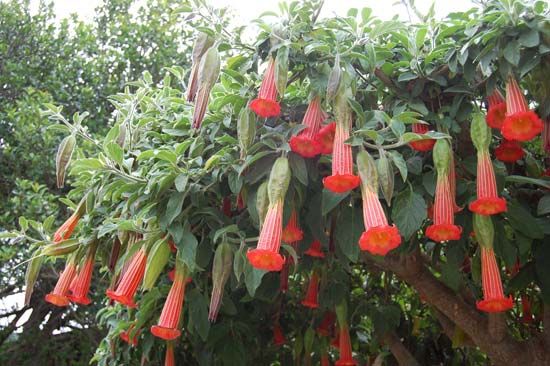
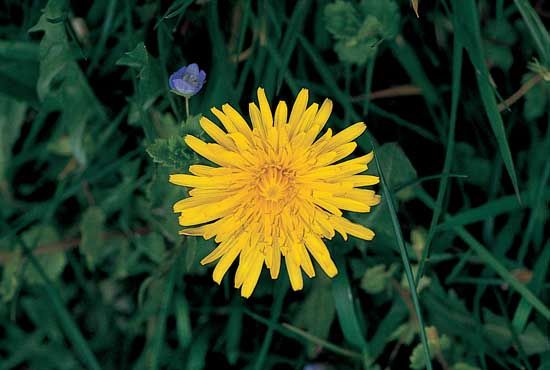
The game features a variety of blossoms, such as the dandelion, daffodil, petunia, and poppy. If you enjoy this challenge, you can further test your skills with Britannica’s Name That Flower! or (Not) All in the Family quizzes.1
What are the main parts of a flower?
A complete flower is composed of four main organs attached to a floral stalk by a structure known as the receptacle. These parts are arranged in alternating whorls from the outside inward:23
- Sepals: The outermost layer, which typically protects the flower bud. Collectively, all sepals are called the calyx.23
- Petals: The layer internal to the sepals, often brightly colored to attract pollinators. Collectively, all petals are called the corolla. Together, the sepals and petals form the perianth.23
- Stamens: The male reproductive parts, collectively known as the androecium. Each stamen consists of a filament (a slender stalk) and an anther (which produces pollen).23
- Carpels: The female reproductive parts at the center of the flower, collectively called the gynoecium. A carpel typically consists of a stigma (to receive pollen), a style (a stalk), and an ovary (which houses the ovules).23
Flowers may also be attached to the plant by a stalk called a peduncle or, in clustered inflorescences, a shorter stem called a pedicel.2
How do flowers reproduce?
Flowers reproduce through a process of sexual reproduction that involves the alternation of generations between a dominant sporophyte phase (the plant body) and a reduced gametophyte phase.5
The reproductive cycle relies on pollination, the transfer of pollen from the anthers to the stigma of the ovary. This transfer is facilitated by agents such as wind, water, or animals. Once on the stigma, the pollen grain germinates, sending a pollen tube down through the style to the ovule.56
Angiosperms undergo a unique process called double fertilization:7
- One male gamete fuses with the egg to form a diploid zygote, which develops into an embryo.57
- The second male gamete fuses with the central cell to form a triploid nucleus, which develops into the endosperm, a nutritive tissue for the embryo.7
Following fertilization, the ovule matures into a seed and the ovary develops into a fruit. Plants may reproduce via self-pollination or cross-pollination, the latter of which promotes genetic diversity.53
Why are pollinators important for plants?
Pollinators are vital to the survival of most wild plants and the stability of terrestrial ecosystems because they facilitate the sexual reproduction of approximately 300,000 species of flowering plants and over 1,000 species of gymnosperms.9
As sedentary organisms, plants rely on external agents—such as insects, birds, and mammals—to transport pollen to female reproductive parts. This process is essential for several reasons:910
- Reproductive Success: Pollinators enable plants to produce seeds and fruits, ensuring the next generation of plants.1112
- Biodiversity: By assisting in reproduction, pollinators help maintain plant [biodiversity], which provides food and shelter for a wide range of wildlife.11
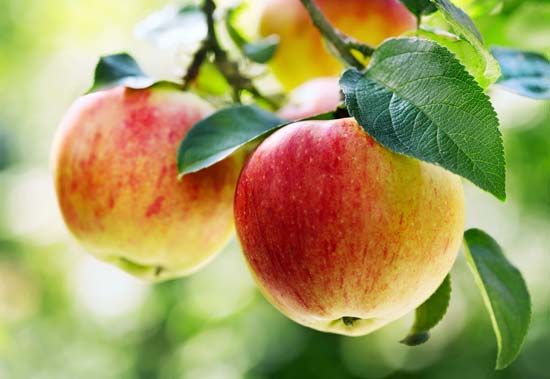
- Agricultural Productivity: Many human food crops, including almonds, apples, and blueberries, depend on insect pollinators to achieve high yields and quality.131112
Without these services, many plant species would struggle to reproduce, leading to habitat changes and potential extinctions that would ripple through entire food webs.1311
Sources
- Britannica’s Flower Bingo — Encyclopædia Britannica
- 5 Fast Facts About Flower Anatomy — Encyclopædia Britannica
- Angiosperm - Pollination — Encyclopædia Britannica
- Angiosperm - General features — Encyclopædia Britannica
- Angiosperm - General features — Encyclopædia Britannica
- Pollination - Types: self-pollination and cross-pollination — Encyclopædia Britannica
- sexual reproduction — Encyclopædia Britannica
- Plant development - Preparatory events — Encyclopædia Britannica
- Major types of pollinators — Encyclopædia Britannica
- Pollination — Encyclopædia Britannica
- What Would Happen If All the Bees Died? — Encyclopædia Britannica
- Why are bees important? — Encyclopædia Britannica
- western honeybee - Importance — Encyclopædia Britannica
- Plant breeding - Mating systems — Encyclopædia Britannica
Published on · 3 min read