Sea Rocket
The sea rocket refers to any of the approximately seven species of plants belonging to the genus Cakile within the mustard family (Brassicaceae)ard) family…
What is sea rocket?
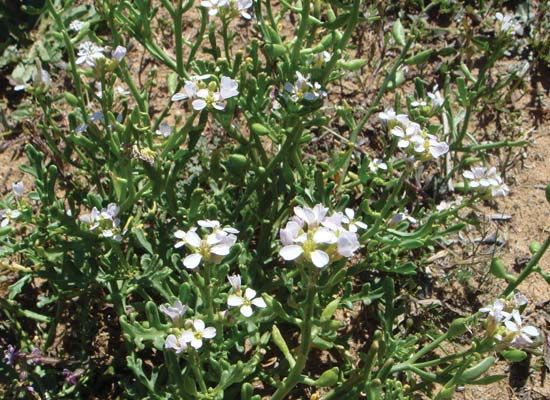
The sea rocket refers to any of the approximately seven species of plants belonging to the genus Cakile within the mustard family (Brassicaceae)ard) family (Brassicaceae).1
These plants are native to coastal regions across North America, Eurasia, western Asia, and Australia, as well as central Arabian deserts. While they are considered edible and possess a hot, pungent flavor, they are notoriously difficult to cultivate.2
Common varieties include:
- European sea rocket (Cakile maritima): Characterized by thick, waxy, lobed leaves and pale-lavender flowers, this species has become an invasive species in parts of North America, where it has displaced native populations.2
- American sea rocket (C. edentula): A similar species native to North American seashores and the Great Lakes.2
How do plants adapt to living in salty coastal environments?
Plants that thrive in saline coastal environments are known as halophytes. These specialized plants have evolved several physiological adaptations to survive in habitats where high salt concentrations would typically cause dehydration in most vegetation.34
Mechanisms of Salt Tolerance
- Salt Accumulation: Certain plants, such as glassworts (Salicornia), manage high salinity by actively accumulating salts within their leaves and stems.3
- Storage in Vacuoles: Many salt-tolerant species, including various types of samphire, isolate and store excess salt in specialized structures called vacuoles within their root, stem, and leaf cells. This sequestration prevents the salt from interfering with essential metabolic processes.4
- Osmotic Regulation: In non-adapted plants, high soil salinity causes water to flow out of the roots via osmosis, leading to dehydration. Halophytes maintain internal osmotic balances that allow them to continue absorbing water even in saline conditions.5
These adaptations enable halophytes to dominate salt marshes and other coastal areas, where they form dense, specialized communities that support significant biodiversity.346
What makes a plant species considered invasive?
An invasive species is defined as any nonnative organism that significantly modifies or disrupts the ecosystems it colonizes. While many introduced species fail to survive in new environments, those that become invasive typically possess a competitive advantage that allows them to thrive, often in the absence of natural predators that would otherwise keep their populations in check.8
Plants are considered invasive when they exhibit the following characteristics and impacts:
- Competitive Dominance: They often outcompete native species for essential resources such as food, water, sunlight, and living space. For example, the common buckthorn creates dense vegetation that blocks sunlight, effectively displacing native flora.89
- Rapid Spread: Invasive plants tend to grow and disperse in a quick or aggressive manner, often monopolizing natural areas and wetlands.10
- Ecological Disruption: By replacing native vegetation, these species reduce biodiversity and can lead to the localized extinction of native plants.8
- Disease Vectors: Some invasive species serve as carriers for parasites or pathogens that further damage the health of the invaded ecosystem.8
What are other common plants found in the mustard family?
The Brassicaceae family, commonly known as the mustard family, is a large group of flowering plants comprising over 4,100 species. While many are well-known agricultural crops, the family also includes a variety of ornamental plants and wild species.1112
Common Food Crops
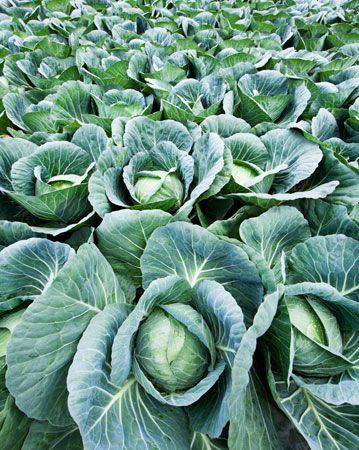
Beyond the well-known Brassica genus—which includes cabbage, broccoli, kale, and turnips—the family features several other culinary staples:
- Root and Leaf Vegetables: Radish, horseradish, arugula, and watercress.1312
- Condiments and Supplements: Wasabi, white mustard, and maca.1312
Ornamental Species
Many members are cultivated for their showy, cross-shaped flowers, including:
- Basket-of-gold (Aurinia saxatilis)
- Candytuft (Iberis species)
- Honesty (Lunaria species)
- Sweet alyssum (Lobularia maritima)
- Wallflower (Erysimum species)
- Stock (Matthiola species)111312
Other Notable Plants
The family also contains wild species such as shepherd’s purse, bittercress, and the model organism thale cress (Arabidopsis thaliana), which is widely used in scientific research.1214
Sources
- sea rocket — Encyclopædia Britannica
- sea rocket — Merriam-Webster
- Salt marsh — Encyclopædia Britannica
- Samphire — Encyclopædia Britannica
- Wetland - Salt marshes — Encyclopædia Britannica
- salinity — Encyclopædia Britannica
- estuary - Salt wedge estuaries — Encyclopædia Britannica
- invasive species — Encyclopædia Britannica
- habitat loss — Encyclopædia Britannica
- invasive — Merriam-Webster
- Brassicaceae — Encyclopædia Britannica
- list of economically important members of the family Brassicaceae — Encyclopædia Britannica
- brassica — Encyclopædia Britannica
- list of plants in the family Brassicaceae — Encyclopædia Britannica
- Brassicales - Brassicaceae , Capparaceae, and Cleomaceae — Encyclopædia Britannica
Published on · 3 min read