Why Do Radishes Taste Spicy?
The characteristic "spiciness" of a radish is not a true heat like that of chili peppers, but rather a sharp, pungent sensation caused by biochemistry.
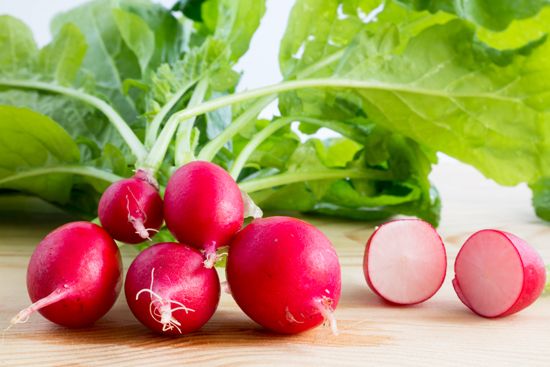
Why do radishes taste spicy?
The characteristic “spiciness” of a radish is not a true heat like that of chili peppers, but rather a sharp, pungent sensation caused by biochemistry.1
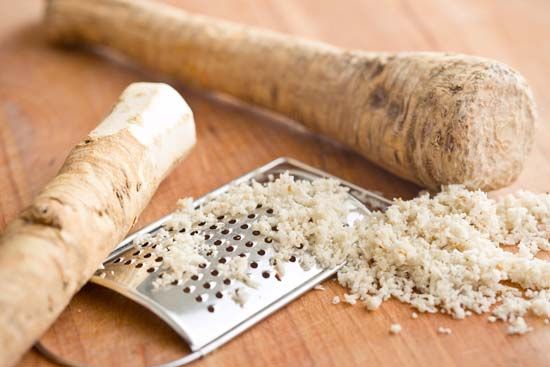
Radishes belong to the Brassicaceae family, which also includes mustard, horseradish, and wasabi. These plants contain natural compounds called glucosinolates. When you bite or crush a radish, you damage its cells, which releases an enzyme called myrosinase. This enzyme breaks down the glucosinolates into pungent metabolites known as isothiocyanates.1
These isothiocyanates stimulate sensory receptors in your mouth and nose, creating a sharp, peppery flavor. While chili peppers rely on capsaicin to produce heat, the radish’s pungency is a defense mechanism evolved to deter pests. The intensity of this flavor is influenced by growing conditions; for example, heat or drought stress can make a radish taste significantly spicier than one grown in cool, moist conditions.1
How does capsaicin in chili peppers differ from radish compounds?
The “spiciness” in chili peppers and radishes arises from fundamentally different chemical processes and compounds.
Capsaicin in Chili Peppers
Capsaicin is an organic nitrogen compound belonging to the lipid group. It is the primary component responsible for the “fiery” heat associated with chili peppers. This heat is measured using the Scoville scale, which quantifies the concentration of capsaicinoids. Because of its physiological effects, capsaicin is also utilized in medical applications, such as topical analgesics for pain relief.2
Isothiocyanates in Radishes
In contrast, the sharp, pungent sensation of a radish is produced by isothiocyanates. These are metabolites created when the enzyme myrosinase breaks down glucosinolates upon cell damage. Unlike the lingering heat of capsaicin, the sensation from isothiocyanates is often described as sharp or peppery and is frequently felt in the nasal passages.1
While both serve as plant defense mechanisms against pests, they interact with human sensory receptors in distinct ways, resulting in the difference between a “fiery” burn and a “sharp” pungency.1
What other vegetables belong to the Brassicaceae family?
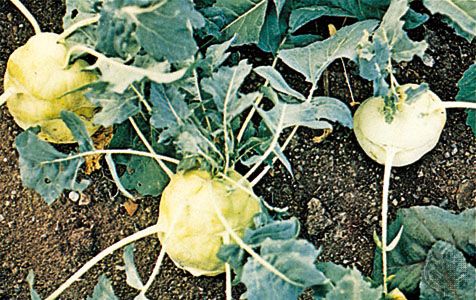
The Brassicaceae family, commonly known as the mustard family, includes a wide variety of economically important vegetables. Many of these belong to the genus Brassica, which is well-known for its diverse agricultural crops.34
Common vegetables in the Brassicaceae family include:
- Arugula
- Bok choy
- Broccoli
- Brussels sprouts
- Cabbage
- Cauliflower
- Collard greens
- Horseradish
- Kale
- Kohlrabi
- Mustard (including brown and white varieties)
- Napa cabbage
- Radish (including daikon)
- Rutabaga
- Turnip
- Wasabi
- Watercress3456
These plants are often referred to as “crucifers” or “cruciferous” vegetables because their flowers feature four petals arranged in a cross-like shape.36
How do plants use chemical defenses to protect themselves from pests?
Plants employ a sophisticated array of chemical defenses to deter herbivores and protect themselves from pests. These strategies range from direct toxicity to complex signaling networks.
Direct Chemical Deterrence
Many plants produce secondary metabolites—complex compounds such as alkaloids, terpenes, and glycosides—that serve as deterrents or poisons. When an herbivore bites into the plant, these substances are released, often triggering bitter taste receptors or causing physical distress. For example, cardenolides can induce vomiting in vertebrates, teaching them to avoid the plant in the future. Some plants, like the dieffenbachia, use specialized cells called idioblasts to fire barbed crystals and release venomous enzymes upon contact.7891011
Signaling and Communication
Plants also use chemical signaling to manage threats:
- Warning Signals: When attacked, plants may release volatile organic compounds that act as “smoke signals,” warning neighboring plants to increase their own chemical defenses.11
- Attracting Predators: Some plants release chemicals that specifically attract the natural predators of the insects currently attacking them, effectively hiring “mercenaries” to defend them.11
- Root Communication: Plants can communicate through chemical networks in their roots or via fungal symbionts.11
Specialized Defenses
The effectiveness of these chemicals often depends on the plant’s growth strategy. Young, nutrient-rich leaves are frequently protected by higher concentrations of defensive chemicals, while mature tissues may rely more on structural defenses like thorns or toughened leaves. While these chemicals are highly effective against many pests, some specialized insects have evolved to tolerate or even sequester these toxins for their own protection.8117
Sources
- Why do radishes taste spicy? — Encyclopædia Britannica
- Capsaicin — Encyclopædia Britannica
- Brassicaceae — Encyclopædia Britannica
- brassica — Encyclopædia Britannica
- list of vegetables — Encyclopædia Britannica
- list of plants in the family Brassicaceae — Encyclopædia Britannica
- Chemoreception - Deterrents and repellents — Encyclopædia Britannica
- Botanical Barbarity: 9 Plant Defense Mechanisms — Encyclopædia Britannica
- Brassicales — Encyclopædia Britannica
- mimicry - The chemical basis for repulsion — Encyclopædia Britannica
- Eating the rainforest — Encyclopædia Britannica
- Chemoreception - Defensive tastes — Encyclopædia Britannica
Published on · 3 min read